
Developing Reading Skills: A Magical Tool in the Early Years
The Parent’s Role in Developing Reading Skills in the Early Years
What if reading was not introduced as a skill to be mastered, but as a shared experience between a parent and a child?
When we talk about reading in the early years, we often focus on how children learn to read. But before that, we need to understand why reading should be introduced early and what role parents play in this journey.
Reading is often seen as the foundation of academic learning. While that is true, reading also supports a child’s cognitive development. It helps children think, imagine, question, and connect ideas. More than anything else, reading gives parents a powerful opportunity to bond with their children and nurture a love for learning.
Reading skills include phonics, vocabulary, comprehension, critical thinking, and general awareness. As parents, it may seem difficult to teach all these areas. However, reading development does not happen through one activity or one teaching method. It happens through multiple, consistent learning moments that are joyful and pressure-free.
There are two important aspects to a parent’s role in reading.
The first is enabling reading skills. This does not mean forcing children to sound out words or read aloud before they are ready. It means helping children engage with books, connect words with pictures, visualise what they hear or read, and slowly begin to understand the text. When parents read with children regularly, these skills develop naturally.
The second and more important role is helping children fall in love with reading.
Children may learn how to read from teachers at school or learning centres like Little Laudable Learners. But their attitude towards reading is shaped at home. When parents involve themselves in reading, children begin to see books as a source of joy, comfort, and curiosity.
Parents can begin by making reading a regular part of daily life. Just like brushing teeth is a habit, reading should feel like a normal part of the home routine. When parents read in front of children and talk about what they are reading, children learn that reading is valuable and enjoyable.
Travelling time can also become reading time. Signboards, shop names, and number plates offer simple opportunities to play word games. Games like “I spy” encourage children to observe their surroundings and engage with words instead of screens.
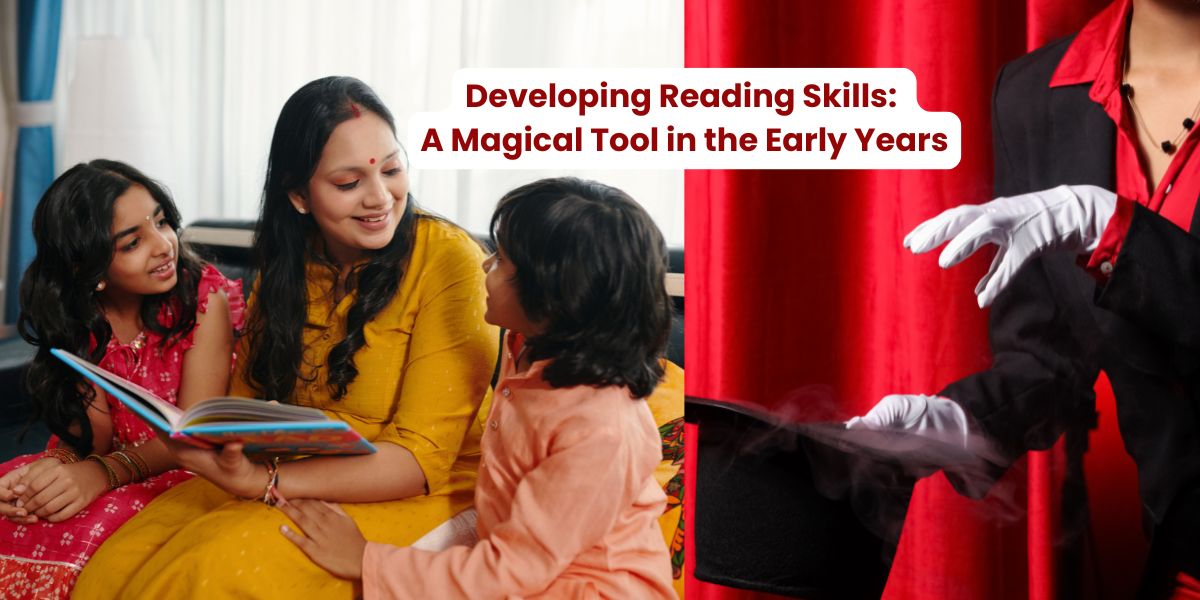
Bedtime stories play a special role in building interest in reading. Parents should read to their children without expecting them to read. The focus should be on enjoyment. Talking about pictures, asking simple questions, and having conversations around the story makes reading a warm and comforting experience.
Connecting words to real-life moments makes reading meaningful. Parents can write small notes, lunchbox messages, or simple cards with their children. Treasure hunts, riddles, and playful clues turn reading and writing into fun activities.
Role play is another powerful tool. Acting out stories, becoming characters, and using expressions help children understand stories better and develop imagination.
More such activities are clearly explained in my book Mindfulways to raise confident readers.
While there are many activities parents can try, a few dos and don’ts are essential.
Dos
- Create joyful reading experiences.
- Read stories as often as the child wants.
- Let children choose their books.
- Allow re-reading without concern.
Don’ts
- Do not force children to read words.
- Do not make children feel small or inadequate.
Do not skip the reading routine.
Do not scold or show disappointment if progress feels slow.
Conclusion
A parent’s role in reading is not to rush a child into reading independently. It is to create a safe and joyful space where books are welcomed and stories are shared.
When children associate reading with warmth, attention, and connection, reading becomes more than a skill. It becomes a habit they carry for life.
That is the true impact a parent can make in a child’s reading journey. 💛