
From Scribbles to Stories: Creating Interest in Writing for Young Children
Every Writer Begins with a Scribble
Every child’s writing journey starts small. From scribbling to colouring, tracing, writing alphabets, sentences, paragraphs, passages, stories, and sometimes even novels. Writing is a gradual process, not a sudden talent.
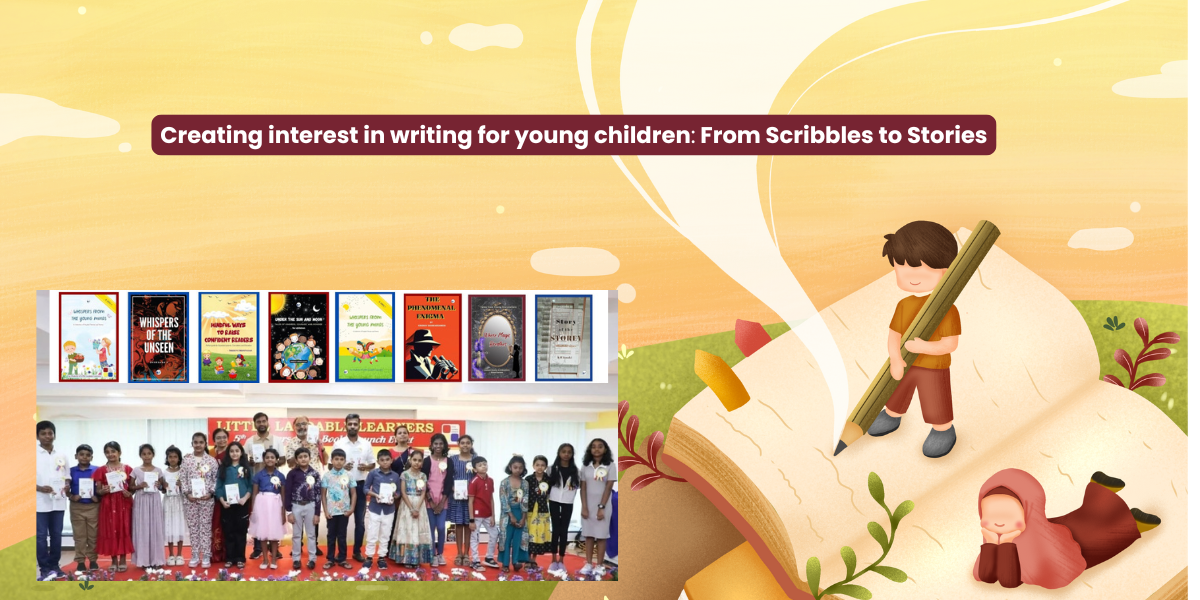
At Little Laudable Learners, we have witnessed this journey many times. Children who showed no interest in writing slowly begin to express themselves through words. They start writing stories for every situation, not because they are forced to, but because they enjoy it.
If you are wondering whether this is possible in today’s AI-driven world, yes my dear readers, it is possible. We have seen it happen.
Why Children Resist Writing
The child who once hated to write, after attending our course, started writing stories and poems. This change did not happen overnight.
Let me explain with a simple example.
Imagine you are a good swimmer. If I take you to a swimming pool and push you into the water, you will start swimming immediately. But if you do not know swimming, you will panic and try to get out of the water as quickly as possible.
Writing works the same way.
When children are pushed to write without being taught how to write, fear replaces interest.
Teaching the Process Builds Confidence
When we teach children how to read, how to write, how to structure a paragraph, how to organise thoughts, and how to create a flow of ideas, writing becomes natural.
When we teach them how to approach story writing, where to start, where to end, how to build a story, and how to engage readers with words, children gain clarity. They know what to do when they sit down to write.
As they write more, they begin to see improvement. When children see a better version of their own writing, they start enjoying the process. And once enjoyment begins, writing no longer feels like a task.
Reading and Writing Go Hand in Hand
At Little Laudable Learners, students learn the basics of creative writing. Along with writing, we read many stories to build strong comprehension skills.
We discuss stories. We analyse characters. We talk about imagery, metaphors, emotions, and poetic expressions. Children understand what makes a story engaging. They learn how stories are structured and how ideas flow.
This awareness helps them write with confidence.
Practice Turns Writing into Joy
With constant practice, children become better at the art of writing. Slowly, fear disappears and curiosity takes over. Writing becomes a space for imagination, expression, and confidence.
And that is when scribbles turn into stories.
A Note for Parents and Educators
When children are guided with the right methods and given the right exposure, interest in writing grows naturally. Writing is not about pressure. It is about process, practice, and patience.