
What if the most powerful skill your child could learn today does not come from a textbook, an exam, or a screen, but from a story?
Before children learn to argue, persuade, or lead, they tell stories. From a very young age, children narrate what they see, feel, and imagine. Storytelling is not just an activity done for fun. It is the base for clear thinking, good communication, and meaningful connection with others.
In every classroom, there are usually two types of students. One child has many ideas but hesitates to speak. Another child is eager to speak but finds it difficult to organise thoughts clearly. Both children need support, not pressure. Storytelling becomes a bridge for both. It gives children a safe structure to arrange their thoughts and present them in a simple and confident way.
When children are asked to tell a story or are given a small cue to begin, they usually shape the story based on their mood, mindset, and inner thoughts. The characters they choose, the problems they create, and the endings they imagine reflect what is happening within them. Through their stories, educators and parents can understand what children are carrying inside. Sometimes emotions like fear, anger, sadness, or confusion show up quietly in their stories. Storytelling then becomes a gentle tool to listen, understand, and support children emotionally.
Let us now look at the important benefits of children learning the art of storytelling.
Language and Communication Development
Storytelling plays a major role in building language skills. Children learn new words, sentence patterns, and expressions naturally. As they listen to stories, read them, and retell them in their own words, their vocabulary grows. Their interest in language and literature develops slowly and steadily. Storytelling also strengthens reading comprehension because children learn to understand meaning, sequence, and emotions in a story. Over time, they become more confident in expressing their thoughts clearly and speaking in complete and meaningful sentences.
Cognitive and Creative Development
A storyteller is first a visualiser. Whether it is a forest, a village, a classroom, or an imaginary land, the child creates a picture in the mind before telling the story. This habit of visualising improves imagination and creativity. Stories usually move through events, challenges, and solutions. This process encourages children to think logically and understand cause and effect. They learn to analyse situations, connect ideas, and find solutions. These thinking skills support learning not only in language but also in subjects like science and mathematics.
Social and Emotional Development
Stories are filled with characters, relationships, and emotions. While telling or listening to stories, children step into the shoes of different characters. They experience happiness, fear, anger, kindness, and courage through the story. This helps children understand emotions better, both their own and those of others. They learn that different people think differently and feel differently. This awareness builds empathy, patience, and emotional strength, which are essential life skills.
Cultural and Moral Values
Stories often reflect culture, traditions, and values. Through storytelling, children learn about different ways of living and thinking. Folk tales, myths, and everyday stories help children understand right and wrong, kindness, honesty, and responsibility. When children tell stories, these values slowly get absorbed into their thinking. They do not just hear about values but begin to feel and practise them.
Holistic Development
Learning from a book, writing an exam, and telling a story create different learning experiences. Telling a story involves thinking, imagining, feeling, and expressing. Because of this, storytelling creates a deep and lasting impact. It supports language development, creative thinking, emotional growth, social understanding, and confidence. Storytelling helps children grow in a balanced and natural way.
How We Teach Storytelling in the Raising Confident Communicators Program
In our Raising Confident Communicators program, we teach storytelling in a gradual and supportive manner. We begin by encouraging children to tell stories as a group. This allows them to feel safe and comfortable, as no child feels alone or judged.
Once they gain confidence, children move on to telling stories with a partner. This stage helps them practise speaking, listening, and building ideas together. Finally, children are guided to tell stories independently. By this time, they feel confident, prepared, and proud of their voice.
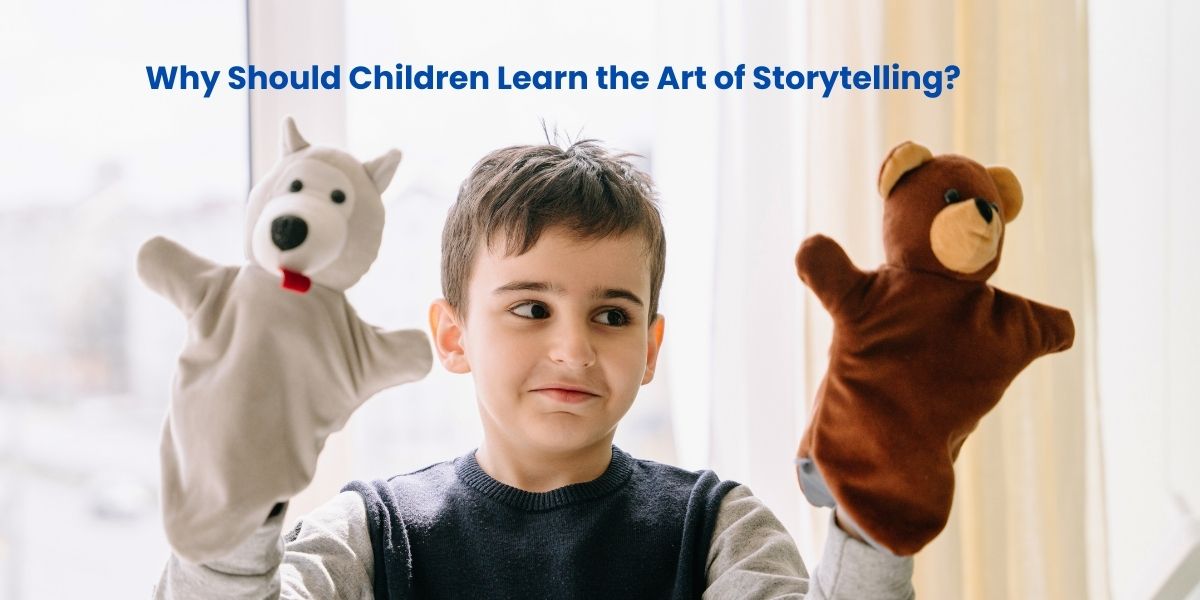
We also introduce children to different forms of storytelling to make learning joyful and engaging. They explore storytelling through puppets, shadow play, props, actions, voice modulation, and expressions. These varied methods help every child discover their own style and embrace storytelling without fear.
If you would like your child to grow into a confident speaker, clear thinker, and expressive communicator, we would love to support them on this journey. To know more about the Raising Confident Communicators program, feel free to get in touch with us. Let us help your child discover the power of their own voice.