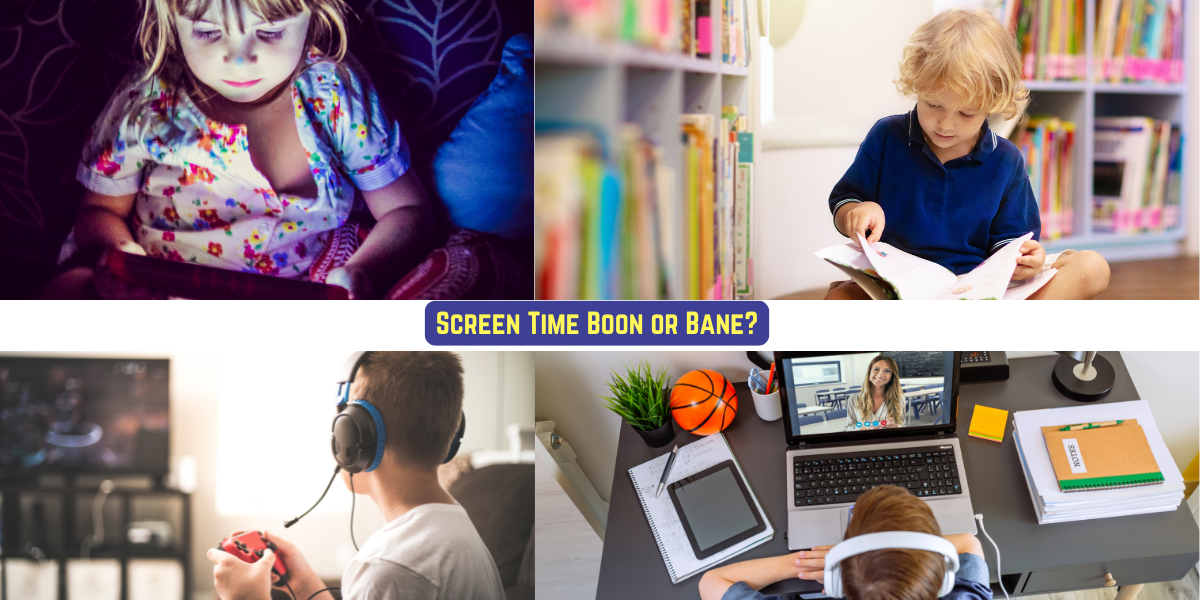

Screen Time Boon or Bane?
– by Sridevi Srinivasan
Screen Time vs Storybook Reading? Do we really have time to think about such choices these days? Ultimately, screen time often wins, capturing the hearts and minds of young ones. Parents, too, feel okay about it—after all, kids stay quiet, don’t make a mess, and parents get to work in peace.
But at what cost?
Children are often exposed to video games that parents know little about. Recently, a teenager named Sam came to me and said, “I want to talk to you.” I took time to have a casual chat with him, and what he shared truly surprised me.
Sam had been playing an online video game with a community of strangers. Like most of these games, players had no idea who they were interacting with. One day, Sam suddenly decided to quit the game and deleted it from his computer.
Curious, I asked, “What made you delete the game all of a sudden?”
He replied, “Ma’am, I had been playing this game for almost a year and never realized how toxic the community was. They constantly used abusive language, and if I didn’t play the way they wanted, they would hurl the worst insults. I used to think this was ‘cool’ and part of being macho. But recently, I realized it’s not cool at all. I was unknowingly picking up these words, and being in that environment was affecting my behavior and mindset. Maybe if I had realized this earlier, I would have focused more on my goals and scored better.”
Sam’s parents were both software professionals—tech-savvy people. Yet, they had no idea what their child was going through.
And what I’ve shared here is just a mild example. There are video games and online communities that can pollute, distract, and damage young minds—often without parents realizing what’s happening.
Is Screen Time Always Bad?
Of course, not all screen time is harmful. Some educational apps, interactive learning tools, and well-monitored digital content can help children develop skills and knowledge. However, uncontrolled, excessive, or unguided screen time—especially in toxic online environments—can have serious consequences.
When children are exposed to drugs, we notice the physical and behavioral changes. But the “drug” of video games and toxic online spaces doesn’t leave any obvious signs—even when your child is sitting right next to you, playing.
On one side, we see teens getting addicted and losing focus. On the other, even infants and toddlers struggle to stay calm without the bright lights of gadgets. Isn’t this alarming?
Imagine these children growing up and taking on responsibilities. Will they be prepared? Are we guiding them in the right direction?
What Can Parents Do?
As the famous quote goes, “Tell me who your friends are, and I will tell you who you are.” It’s crucial for us as parents to understand the communities our children are engaged in.
It’s not easy to pull children away from gadgets. They may throw tantrums and even resent us for trying. But is there a way to make a change?
Here’s what I suggest:
✔ Have casual conversations. Talk to them. Don’t judge. Just listen. Make sure they feel heard.
✔ Show them you care. Not by giving advice or instructions, but by spending quality time with them. Play together, read books, listen to their favorite music (even if you don’t like it), and take an interest in their hobbies.
✔ Understand their world. Watch them play their games and ensure they are not in a toxic environment. Be a friend while keeping a gentle watch.
✔ Introduce them to positive communities. Encourage them to join groups focused on reading, writing, singing, or public speaking. Surrounding them with motivated peers will inspire them and help them grow in the right direction.
✔ Choose better Screen time. Encourage them to join online/ offline groups focused on reading, writing, singing, or public speaking. Surrounding them with motivated peers will inspire them and help them grow in the right direction.
One of the main intentions of Little Laudable Learners is to create such safe online community of readers, writers, speakers and storytellers who develop a love for language and books. Through our afterschool online classes, children engage in meaningful reading experiences, improving their communication skills while being part of a positive and inspiring environment. We have witnessed the positive changes that we have brought in children after using our platform.
Our children’s future depends on the choices we make today. Let’s be intentional about guiding them toward healthier habits and meaningful connections.